

Dark Money Puppets in Congress

Introduction: The Shadow that Controls the Stage
When registered voters head to the booth they’re often hoping to shape their futures and the generations that follow. Yet underneath a darker force, untraceable money, often determines the outcome. Unfortunately this was not something our founders foresaw. That one day PACs, think tanks and nonprofits would pour billions in "dark money" to flood elections. That there would be no transparency on who's paying or what they want in return. This is our current status in 2026, where corporations and billionaires wield influence far beyond their vote. The power of this dark money is at such a scale now that it is shaping legislation, blocking reform, and capturing politicians through donations and lobbying. From fossil fuel subsidies to pharmaceutical price protections, too many policies serve profits over people and voters are left wondering why change never comes.
Money in politics will continue to threaten democracy unless we do something about it. With floodgates open over the last 15 years wealthy corporations, individuals, and special interests bent both parties to their will. Political campaigns now resemble a race to see who can beg for the most money, meaning voices of everyday citizens are drowned out by cash. For historical context, this isn’t how American democracy was designed. For much of the 20th century, campaign finance was tightly regulated. That changed dramatically with the 2010 Supreme Court ruling in Citizens United v. FEC, which unleashed unlimited corporate political spending under the guise of free speech. Since then, the rise of dark money groups and mega-donors has drowned out individual voices. Meanwhile, the lobbying industry has ballooned into a $4 billion powerhouse, with former lawmakers and corporate lawyers writing laws behind closed doors. The result is a political system increasingly for sale.

Citizens United didn't just open Pandora's box, it unleashed a tsunami of corporate influence, washing away the notion of government for the people, by the people, and transforming it into a playground for the wealthy elite.
America does not suffer from a lack of patriotism, it suffers from a lack of humility in the halls of power.
You can feel it in your wallet and your workplace. Big Pharma lobbyists protect drug monopolies, energy giants delay climate action, and tech firms block data privacy laws. This is corporate influence controlling Congress. Americans pay more, work harder, and see less - continually frustrated that Washington doesn’t seem to work for them. The gap between what people want and what Congress delivers is purchased gridlock.
Core Issues & Reform Proposals
ISSUE = Unlimited Political Spending by corporations and billionaires can give unlimited amounts through loopholes. REFORM = Overturn Citizens United and pass a constitutional amendment to allow limits on corporate political spending.
ISSUE = Lack of Transparency by dark money groups that hide donor identities from the public. REFORM = Real-Time Transparency that requires disclosure of all donations over $200 within 48 hours.
ISSUE = Lobbying Industry Power that allow former lawmakers and corporate insiders to dominate lawmaking. REFORM = Lobbying Bans that prohibit members of Congress from becoming lobbyists for at least 10 years.
ISSUE = Pay-to-Play Culture where donations often buy access, influence, or even legislation. REFORM = Ban Corporate PACs and end direct corporate funding of campaigns and third-party spending groups.
ISSUE = Voter Disillusionment and public trust erodes as government appears rigged for the wealthy. REFORM = Public Campaign Financing that offers small-donor matching programs to elevate everyday voices.
What can we do now?
These issues should be a clear warning sign to the founding principles of representative government, where the size of one's wallet outweighs the strength of one's convictions. To change that, aside from overturning Citizens’ United, here are now → near-term → long-term possible solutions with enforceable rules, real penalties, and zero loopholes.
Total Ban on Individual Stock Trading by Members, Spouses, and Children: Members may hold only (a) U.S. Treasury securities and (b) broad-based, low-fee diversified funds like a total-market or S&P 500 index. Mechanics & Enforcement include a 30-day divestiture window after taking office into a qualified blind trust run by a court-approved fiduciary. Criminal penalties for violations, felony insider trading standard, and automatic disgorgement of profits + treble damages. SEC + DOJ joint jurisdiction; House/Senate Ethics must refer within 14 days of credible complaint. Real-time public dashboard showing each Member’s compliance status; missed filings trigger automatic fines. No Member of Congress, spouse, or dependent shall directly or beneficially own or transact in any individual equity, option, crypto token, or sector-specific fund.
NASCAR-Level Donor Transparency: You shouldn’t need a PhD to know who owns your representative. Sports figured this out decades ago. Mechanics & Enforcement mandate the top 10 funding sources (PACs, bundled donors, dark-money pass-throughs traceable to a source, and top industry categories) must be visibly displayed whenever Members appear in official capacities: on a nameplate patch in chamber or committee, and prominently on official websites, newsletters, and hearing placards. Quarterly updates with machine-readable datasets; $5,000/day fines for noncompliance; loss of committee voting after 30 days delinquent. To address compelled-speech objections, tie it to access to official platforms like floor speaking time, committee questioning, official mail privilege. You want the microphone? Wear the disclosures.
Near-Term
Corporate Lobbying Ban: Banning Corporate Lobbying by for-profit corporations and their controlled entities. Allowed: testimony in public hearings, written comments on rules, and participation in multi-stakeholder advisory processes on the record. Not allowed: paid, private, for-profit lobbying communications or indirect lobbying via trade associations. Enforcement: DOJ Public Integrity + mandatory lobbyist registry audits; violation = corporate felony, triple damages on contracts/benefits gained.
Revolving-Door Cooldown: 10-year cooling-off period for Members and their Chiefs of Staff from any paid lobbying/“strategic advisory” work aimed at Congress or agencies. Lifetime ban on lobbying for any entity that benefited from a program the Member directly authored or that appeared in the Member’s committee jurisdiction in the prior 4 years.
Three Open Books Rule: Open Calendars: all Member/committee meetings posted within 72 hours with attendees, topics, and materials (security-sensitive redactions allowed with IG sign-off). Open Contracts: any federal contract >$100k posted with plain-English summary, scoring sheets, and bidder list. Open Drafts: legislative text and amendment redlines posted 72 hours before any vote.
Long-Term Constitutional Amendments
Section 1 — Term Limits for Congress
House: six terms (12 years) lifetime.
Senate: two terms (12 years) lifetime.
Partial terms >2 years count as full.

Section 2 — Anti-Gerrymandering for Fair Maps, Not Safe Seats
Nonpartisan independent commissions shall draw all congressional districts.
Required criteria: equal population, contiguity, compactness, respect for political boundaries, preservation of communities of interest, and partisan fairness measured via accepted metrics such as efficiency gap / mean-median.
Explicit ban on intentional partisan advantage. Fast-track judicial review with special masters authorized to impose maps if commissions or legislatures fail. No federal court abstention.
Section 3 — Overturn Citizens United
To overturn Citizens United, we need a constitutional amendment to limit money in politics. This would allow Congress to set rules on campaign spending and end the idea that corporations have the same free speech rights as people when donating. It puts power back in the hands of voters, not billionaires.
It goes “Gutted, Reversed, Overturned” if not locked in.
Every reform era in American history from Trust-Busting in the early 1900s, post-Depression bank rules in the 1930s, Watergate ethics laws in the 1970s, to post-2008 financial reforms was followed by relentless industry pressure and court decisions that nibbled, then devoured, the safeguards. Without constitutional foundations and self-executing triggers like automatic fines, automatic pay reductions, automatic prosecution referrals, the next wave of lobbyists and donors will whittle new legislation down to a press release. So we must code the guardrails into text to weaponize transparency and criminalize the grift. Then stop pretending that “disclosure” alone is enough and ban the behavior that breeds corruption in the first place.
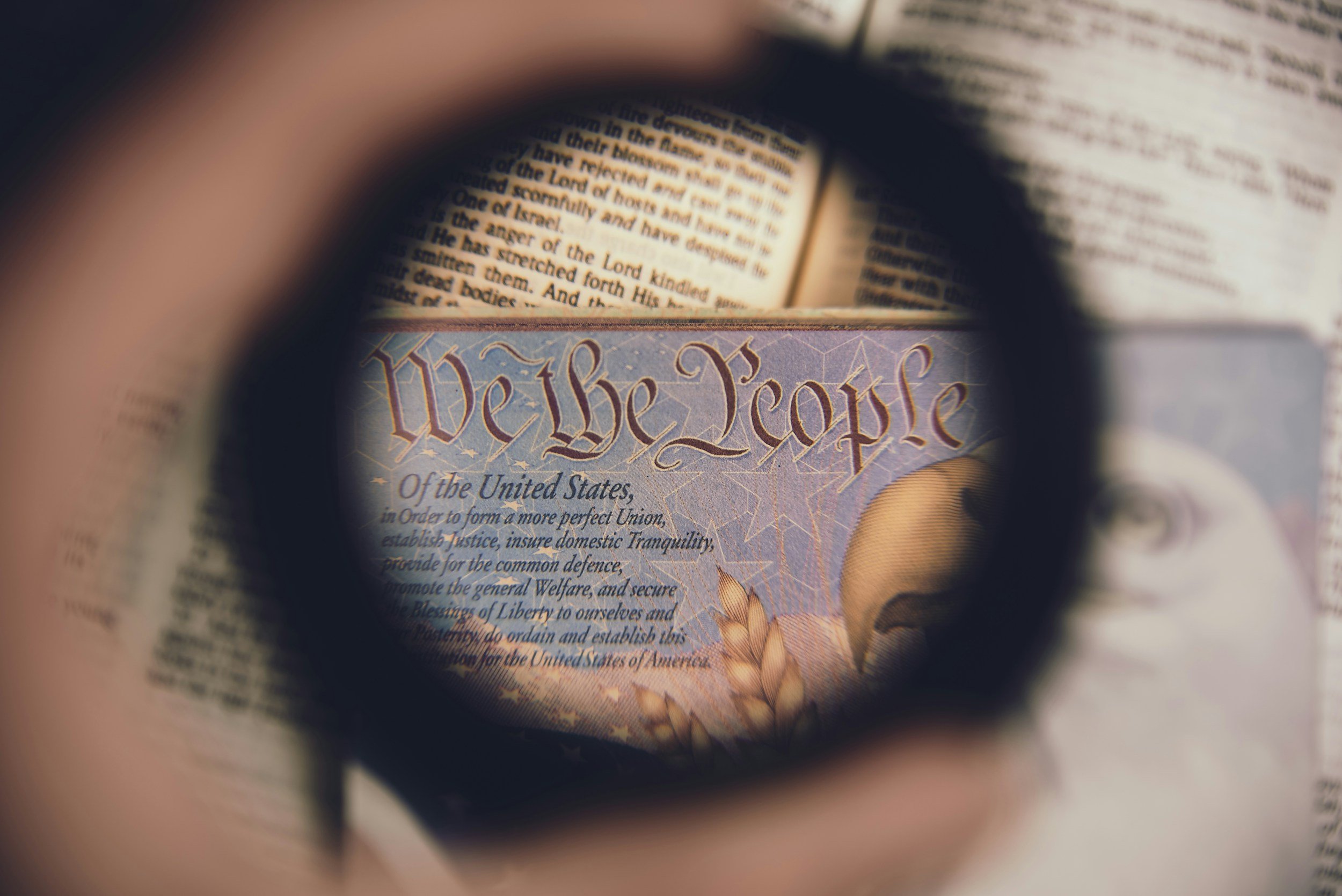
“We the People” Is Not a Slogan, It’s a Standard
A Congress that can day-trade defense stocks, hide who bought their last fundraiser, carve their own voters, and float seamlessly into seven-figure lobbying gigs does not represent We the People. The promise of democracy is one person, one vote. Not one dollar, one law. We can’t fix healthcare, climate change, or the economy until we fix who Congress listens to. So it is time to drag dark money into the light and cut the corporate strings.
What can you do? Support candidates who reject PAC money. Share the truth about dark money. Demand disclosure laws and lobbyist bans. Organize and volunteer where you can. Real reform starts with informed citizens refusing to be sold out.
https://www.fec.gov/legal-resources/court-cases/citizens-united-v-fec/