Term Limits Now

The absence of term limits transforms elected representatives into political monarchs, accountable to no one but their own ambitions and the special interests that fuel their perpetual reelection campaigns.
In recent years, the American public has watched in frustration as powerful figures in both Congress and the Supreme Court weather scandals, conflicts of interest, and blatant abuses of trust without consequence. Justices have accepted lavish gifts from billionaires without disclosing them. Lawmakers have stayed in office well past their ability to effectively serve, some entangled in ethics investigations that go nowhere. Despite public outcry, neither branch faces term limits nor is bound by a truly enforceable code of ethics. For institutions designed to check each other, the real failure has been their refusal to check themselves.
The Founding Fathers debated term limits, but ultimately left them out of the Constitution, trusting that elections would be the ultimate check. What they didn’t foresee was the rise of hyper-partisanship, gerrymandering, and incumbency advantages so strong that over 90% of congressional races are now safe bets. Meanwhile, the Supreme Court modeled after the British system was granted lifetime tenure to ensure independence, but without anticipating the politicization of the confirmation process or the potential for justices to remain decades beyond their peak mental acuity or ethical impartiality.
For everyday citizens, the result is stagnation. Laws that could lower healthcare costs, fix crumbling infrastructure, or raise wages are buried under partisan gamesmanship. Meanwhile, the Supreme Court makes decisions that affect reproductive rights, environmental protections, and campaign finance often in ways that reflect ideology more than jurisprudence. Americans feel powerless watching the same names hold office for 30, 40, even 50 years, while their own lives remain tethered to systems that rarely evolve to meet modern needs.
Core Issues
Lack of Term Limits: Career politicians accumulate power and become less responsive to constituents.
No Enforceable Ethics Codes: Both Congress and the Court are essentially self-policing, with predictably poor results.
Lifetime Appointments: Justices can serve long past their impartiality or capability, affecting generations of law.
Entrenched Partisan Influence: Seniority systems and court nominations are driven by party agendas rather than public good.
Voter Disillusionment: Citizens lose faith in institutions that appear above accountability.
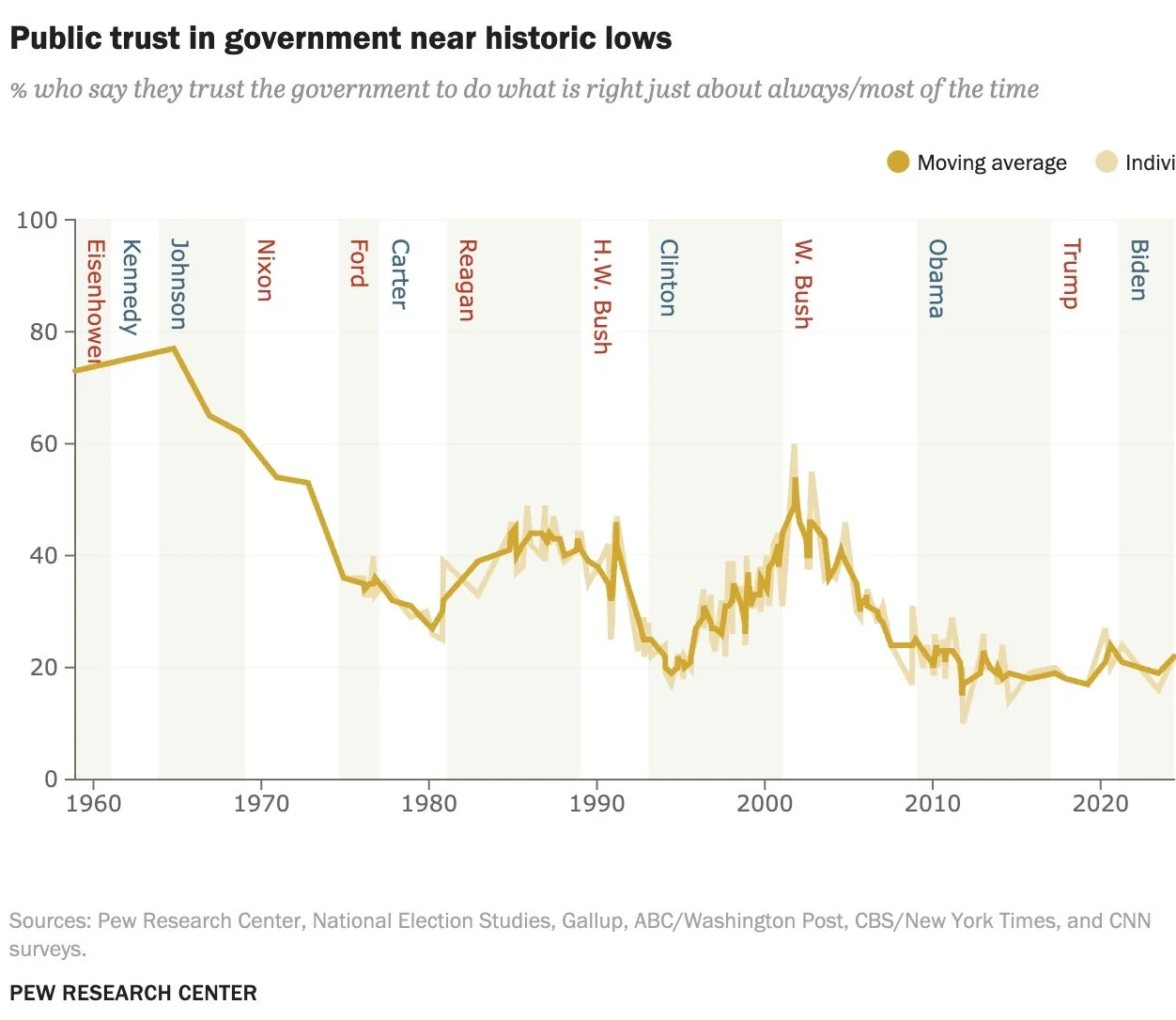
Just 17% of Americans now say they trust the government in Washington to do what is right “just about always” (2%) or “most of the time” (15%).
Creative Reform Proposals
Congressional Term Limits: Cap House and Senate service at 12 years to allow turnover while retaining experience.
Supreme Court Term Limits: 18-year staggered terms with appointments every two years, as proposed by scholars across the spectrum.
Binding Ethics Code: Establish an independent Ethics Commission to monitor and enforce conduct in both branches.
Judicial Rotation System: Introduce appellate judge rotation for SCOTUS nominees to reduce political stakes.
Public Pressure Platforms: Use civic tech tools to organize around transparency and accountability at the state and national levels.
Critics argue that term limits remove experienced lawmakers and justices but experience shouldn’t mean entitlement, it should inspire mentorship and succession planning. Others claim that an ethics commission could threaten judicial independence. Yet independence without accountability is impunity. Finally, skeptics worry reforms would require constitutional amendments. That’s true and it’s exactly why building popular momentum is essential. The harder the fix, the more urgent the effort. We’ve tolerated too many headlines about corruption, inaction, and insider privilege. It’s time to reclaim our democracy. Term limits and ethics enforcement are not radical ideas. They are foundational to a functioning republic. If we want a government that works for us, we must stop settling for one that only works for itself.
What can you do? Steps to Implement Term Limits
Demand reform from your representatives. Support initiatives and candidates who champion accountability. Organize. Vote in primaries. Speak up in town halls. Share knowledge. Democracy isn’t broken, it’s neglected and we can fix it.
Building Public Support - The first step in imposing term limits on Congress is building widespread public support. Grassroots movements, public awareness campaigns, and advocacy organizations can help educate the public on the benefits of term limits and mobilize support for the cause.
Legislative Proposals - To initiate the constitutional amendment process, legislators supportive of term limits must introduce proposals in Congress. These proposals need to outline the specific term limits for both the House and Senate, and garner significant support from fellow lawmakers.
State Involvement - If Congress is unable to pass a term limits amendment, states can take the lead. Article V of the Constitution allows for a convention of states to propose amendments if two-thirds (34 out of 50) of state legislatures call for it. This method bypasses Congress and puts the power directly in the hands of the states.
Ratification Process - Once a term limits amendment is proposed, either by Congress or a convention of states, it must be ratified by three-fourths (38 out of 50) of state legislatures. This step requires a coordinated effort among states and sustained public pressure to ensure successful ratification.
Imposing term limits on Congress is a complex and challenging endeavor, but it is not impossible. By understanding the rationale behind term limits, addressing the challenges, and following the necessary steps, advocates can work towards a more accountable, dynamic, and representative legislative body. Public support and persistent advocacy are crucial to making term limits a reality, ensuring that the United States Congress remains responsive to the needs and aspirations of its citizens.