

Interpreting the 2nd Amendment 250 years later.

A skilled marksman could shoot less than 2 rounds a minute when the 2nd amendment was passed, automatic weapons can now shoot 300-400 rounds within a minute if belt-fed.
Security in a Modern Context
What does the 2nd Amendment mean to you? Is it the ability to protect your home and loved ones? The ability to defend yourself from an abusive government (a don’t tread on me mentality)? I’ve seen a lot of politicians shoot or hold a weapon in an ad, but few actually know how to safely operate, clean, dismantle, reassemble, safety check, or perform immediate action when the weapon malfunctions during use. I didn’t grow up around weapons but joining the Marine Corps and serving as an infantry squad leader taught me that what our society treats as toys and collectibles are indeed deadly weapons in the wrong hands. Similar to how a vehicle can be dangerous when operated in the wrong manner, we should license those that want to own and operate weapons that our forefathers couldn’t have imagined.
"A well regulated Militia, being necessary to the security of a free State, the right of the people to keep and bear Arms, shall not be infringed." The interpretation of this provision has sparked ongoing debates about individual gun rights, the necessity of regulation in the face of mass shootings, and the intersection with a mental health crisis. This article attempts to explore the balance between the right to bear arms emphasizing the original intent of a "well regulated Militia" and its relevance in today's context of an all-volunteer military force while offering solutions to protect public safety.

Shooting is a skill, pulling the trigger is only about 10% of it. There is also disassembly, maintenance, reassembly, safety checks, immediate action drills for malfunctions, stances or shooting positions, magazine changes, breathing techniques, optics, how to chamber and unchamber rounds, and general weapons safety and handling.
As a new nation in the late 18th century without a standing army, a young independent America relied on state militias for defense. Militias were composed of ordinary citizens who were expected to be ready for military service and the phrase ‘well regulated’ was understood to mean a disciplined and well-trained force necessary for the security of a free state. Over time this collective right for protection against tyranny has increasingly been interpreted as an individual right to possess firearms, a view solidified by the Supreme Court in cases such as District of Columbia v. Heller (2008).
250 years later the United States relies on an all-volunteer military that maintains its own weaponry and operates under a centralized command structure. This professional force is supplemented by the National Guard, which can be mobilized for both state and federal missions. Unlike the 1790 militia, modern military personnel undergo extensive training and are subject to strict regulations regarding the use and maintenance of their weapons. This evolution raises questions about the applicability of the Second Amendment's original intent to current gun rights debates.
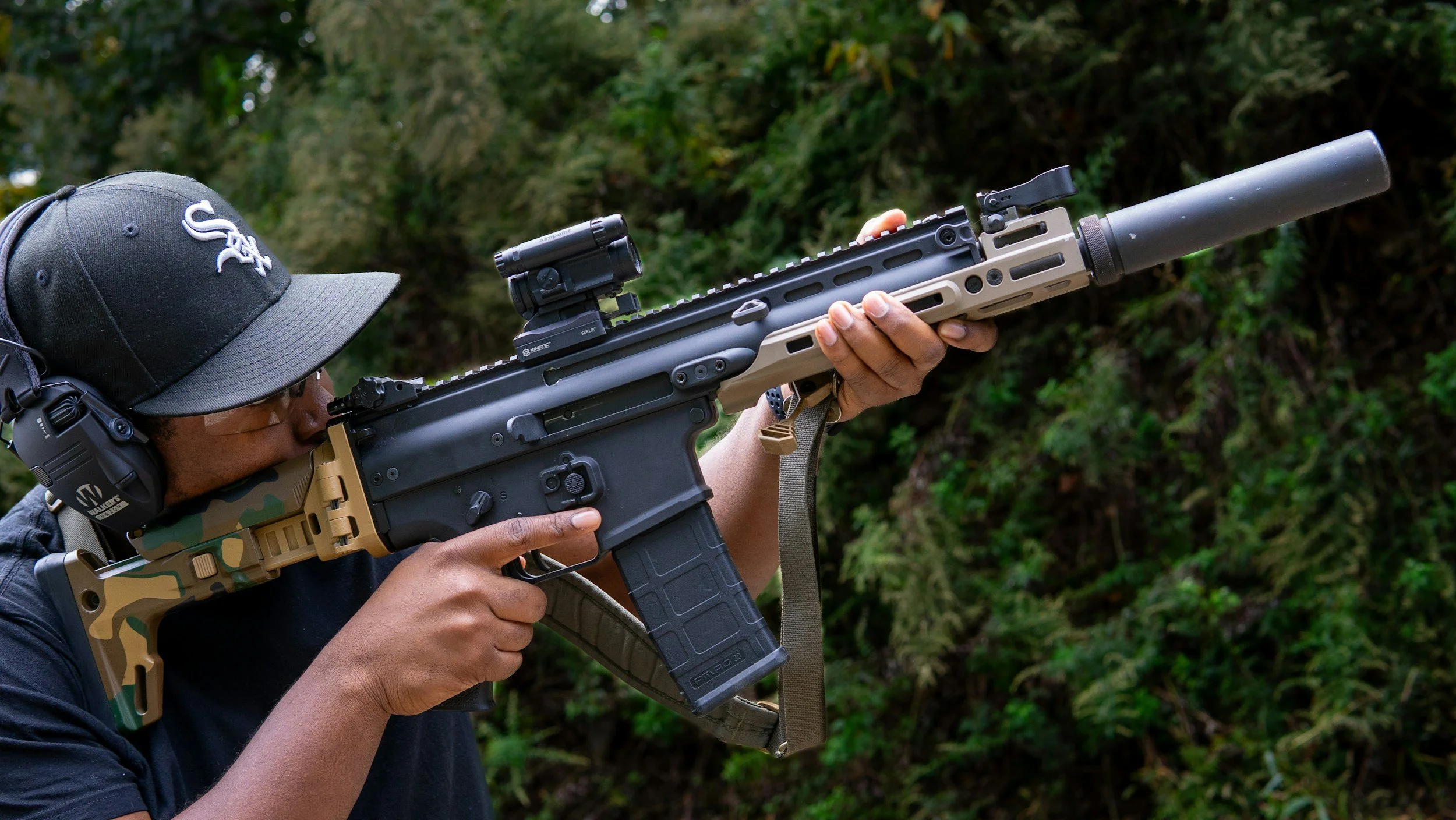
Rate of Fire: 1790 (~3-4 rounds/min) vs. 2026 (~300+ rounds/min).
Range/Accuracy: 1790 (~100 yards, low accuracy) vs. 2026 (500+ meters, high precision).
The Growing Mental Health & Mass Shooting Crisis
The relationship between mental health and gun violence is complex, but data suggest that individuals with severe mental illness are at higher risk of harming themselves or others if they have access to firearms. There is little doubt that the United States is facing a mental health crisis, with rising rates of mental illness and inadequate access to mental health services. According to the National Institute of Mental Health, nearly one in five U.S. adults live with a mental illness. Is it correlation or causation that the ease of access to assault weapons is leading to an increase in mass shootings? I don’t find it taboo to talk about a subject that is needlessly taking lives. As someone that grew up during the 90s, I remember hearing about an assault weapons ban. If we’ve done it before, we can do it again - we just need people with a spine and the willpower to do so. Even republicans like Ronald Raegan and Rudy Giuliani were supportive of the assault weapons ban at the time.
There is currently no federal ban on assault weapons in the United States, as the 1994 Public Safety and Recreational Firearms Use Protection Act expired in 2004. Several states have enacted their own restrictions on certain semi-automatic firearms and high-capacity magazines. The 1994 act banned the manufacture, transfer, and possession of specific semi-automatic firearms with certain military-style features (e.g., pistol grips, folding stocks) and magazines holding more than 10 rounds. It did not apply to weapons manufactured before the ban took effect. The law included a 10-year sunset provision and was not renewed by Congress in 2004. Aside from a new assault weapons ban there are a number of ways to improve the safety of the American public.
Implementing universal background checks for all firearm purchases can help prevent individuals with a history of severe mental illness or criminal behavior from obtaining guns. According to a study by the Johns Hopkins Center for Gun Policy and Research, states with comprehensive background check laws experience lower rates of gun-related deaths.
Red flag laws, or extreme risk protection orders, allow family members and law enforcement to petition a court to temporarily remove firearms from individuals deemed a threat to themselves or others. These laws provide a proactive approach to preventing potential tragedies while respecting due process rights. Expanding access to mental health services is crucial for addressing the root causes of gun violence.
Increasing funding for mental health programs, weapons buyback programs, and integrating mental health care into primary care settings are essential steps. Promoting responsible gun ownership through education and training programs with the local PD or Sheriff’s Department can help ensure that gun owners understand safe storage practices and the legal responsibilities of firearm ownership. This approach aligns with the original intent of a "well regulated Militia" by emphasizing discipline and preparedness.
The Second Amendment enshrines the right to bear arms, but it also underscores the necessity of regulation to ensure public safety. Balancing this right with the need to address the growing mental health crisis requires thoughtful policies that respect individual freedoms while protecting the community. Universal background checks, red flag laws, expanded mental health services, and education initiatives can collectively create a framework that honors the spirit of the Second Amendment in a modern context. By fostering a well-regulated approach to gun ownership, we can safeguard both the rights and security of all citizens.

Sources:
1. National Institute of Mental Health https://www.nimh.nih.gov
2. Johns Hopkins Center for Gun Policy and Research https://www.jhsph.edu/research/centers-and-institutes/johns-hopkins-center-for-gun-policy-and-research
3. District of Columbia v. Heller, 554 U.S. 570 (2008) https://www.oyez.org/cases/2007/07-290
4. Centers for Disease Control and Prevention https://www.cdc.gov